 ChatGPT
 Claude
 Grok
Grok Perplexity
 Gemini
What Is SEO?
SEO stands for search engine optimization. It helps your website appear in organic search results, not paid ads. With SEO, you do not pay for each click. Instead, you improve your site so search engines trust it.
Good SEO strategies include:
-
Keyword research
-
SEO content creation
-
On-page SEO
-
Technical fixes
-
Local SEO strategies
-
Link building
SEO focuses on attracting organic traffic. It helps your site climb in ranking over time.
SEO takes patience. It usually takes a few months before you see strong SEO results. But once you rank, traffic can continue without paying per click.
That is why many small businesses invest in SEO as part of long-term digital marketing strategies. As SEO builds trust, authority, and long-term organic visibility. If you want to understand how trust signals impact rankings in more detail, you can explore our guide on E-E-A-T for Global Websites: How to Build Cross-Country Trust Signals.
What Is PPC?
PPC stands for pay-per-click advertising. It involves creating a PPC ad through platforms like Google Ads. You bid on keywords, set a budget, and pay for each click.
It provides immediate visibility at the top of search results. If you launch a PPC campaign today, you can get traffic today.
That is why many new businesses start with PPC marketing. PPC offers immediate exposure, especially in competitive Texas markets.
But PPC requires an ongoing budget. Once you stop paying, the visibility stops.
The Key Difference Between SEO and PPC
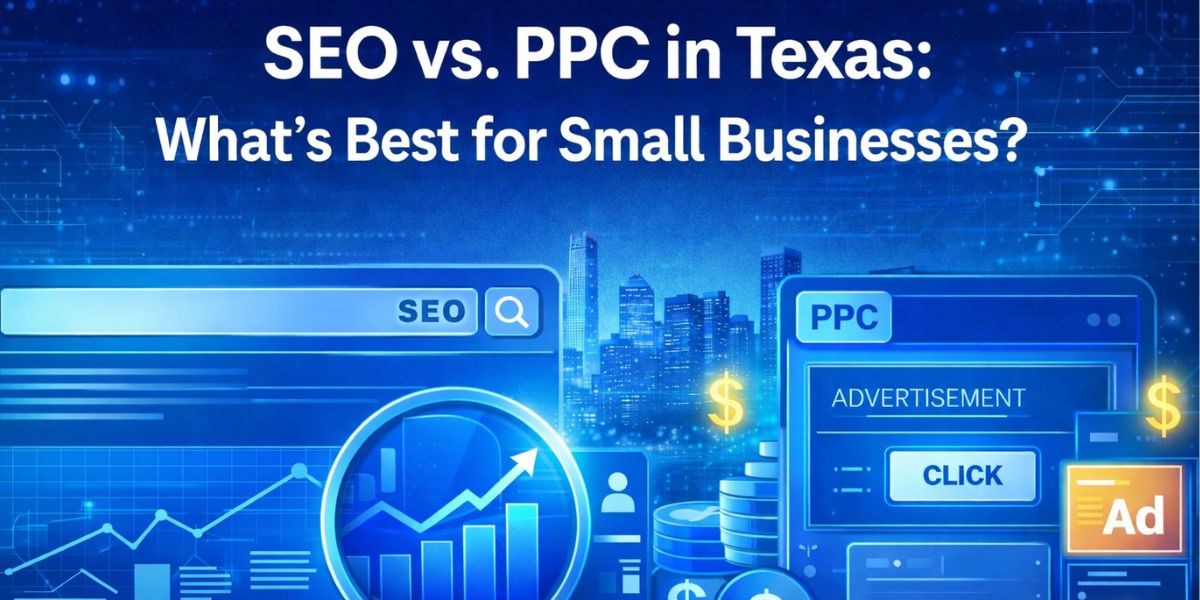
The difference between PPC and SEO comes down to speed, cost, and long-term value.
| Factor | SEO | PPC |
|---|---|---|
| Speed | SEO takes time. SEO usually builds results in 3–6 months. | PPC delivers immediate traffic. PPC offers immediate visibility. |
| Cost | Costs associated with SEO include content, technical work, and optimization. Once ranked, you don’t pay per visitor. | PPC requires you to pay for each click. Competitive keywords in Texas can cost $20–$40 or more. |
| Longevity | SEO builds lasting authority and organic traffic. | PPC traffic stops when the ad spend stops. |
In simple terms, SEO builds a foundation, whereas PPC gives fast results.
SEO vs PPC in Texas Cities
Different cities mean different competition.
In Houston and Dallas, high-demand industries often use both SEO and PPC. These markets are crowded, and search engine marketing is aggressive.
In Austin, tech startups often focus on PPC campaigns for quick growth.
In San Antonio, local SEO strategies can still win strong ranking positions with consistent SEO efforts.
Understanding your city helps guide your digital marketing strategy.
When to Focus on SEO?
You may want to focus on SEO if:
-
You want steady, long-term growth
-
You want strong organic SEO results
-
Your customers research before buying
-
You want SEO to build brand authority
SEO requires ongoing work. SEO may feel slow at first. But over time, SEO provides stable traffic.
SEO is a more cost-effective option long-term compared to always paying for paid ads.
If you want lasting visibility, SEO could be the smarter move.
When to Go for PPC?
Sometimes speed matters. You may want to go for PPC if:
-
You need leads now
-
You are launching a new product
-
You are testing a new offer
-
You want to target a specific audience
PPC gives quick results. PPC brings measurable data fast. You can test which keyword drives sales via PPC before creating SEO content.
But remember, PPC requires careful management. Managing their PPC budgets poorly can lead to high costs without strong returns.
Understanding ROI: SEO vs PPC
Results of PPC show up quickly. You can track every click, every conversion, and every ad. SEO performance grows slowly but compounds over time.
For example, if you pay $30 per click in Houston and convert 1 out of 10 visitors, that’s $300 per lead.
With SEO, you make an investment in SEO upfront. As your ranking improves, your cost per lead often drops. That is why many experts say combining SEO and PPC gives the strongest results.
Combining SEO and PPC for Stronger Growth
Combining SEO and PPC is often the smartest move.
Here’s why:
-
PPC data shows which keyword converts best
-
SEO targets those same keywords organically
-
PPC supports new pages while SEO builds ranking
-
SEO best practices improve landing pages for better PPC performance
PPC and SEO strategies together increase visibility across search engines. They could work side by side. PPC brings fast traffic. SEO builds stability. Many Texas businesses run PPC while building their SEO foundation.
Common Mistakes in Digital Marketing
Small businesses often struggle because they:
-
Focus only on PPC
-
Ignore SEO efforts
-
Stop SEO too early
-
Run PPC campaigns without tracking
-
Target the wrong keyword
Balanced marketing strategies work best. Understanding SEO and understanding how PPC involves paid targeting both matter.
Which One Should You Choose: SEO or PPC?
There is no single answer. If you need immediate traffic, focus on PPC. If you want long-term organic traffic, focus on SEO. But if you want both speed and stability, use SEO and PPC together.
Texas is competitive. Search engines reward strong digital marketing efforts. SEO builds authority. PPC provides immediate visibility. The smartest businesses know when to use each.
Frequently Asked Questions (FAQs)
1. What are the main differences between SEO and PPC in Texas?
The biggest difference comes down to time and how you pay for traffic. SEO helps your website show up naturally in search results, but it takes time to build. PPC puts you at the top almost instantly, but you’re paying for every click that comes in.
2. How does the cost of SEO compare to PPC in Texas?
With SEO, you’re investing in your website, content, technical fixes, and ongoing improvements. You don’t pay for each visitor. PPC works differently. Every click costs money, and in competitive Texas cities like Houston or Dallas, those clicks can get expensive fast.
3. Can local Texas businesses benefit more from SEO or PPC?
Most local businesses actually benefit from using both. SEO helps you rank for long-term searches like “plumber in Austin,” while PPC can bring in quick leads when you need them. It’s less about choosing one and more about using them wisely.
4. How much should a small business in Austin spend on SEO or PPC?
There isn’t a fixed number. There are some businesses that spend a few hundred dollars monthly, and there are some that spend several thousand. It is based on your industry, your competition, and the speed at which you want results. PPC prices are associated with the competition for the keywords, whereas SEO prices rely on the quantity of work that should be done on your site.
5. What should I look for when choosing an SEO and PPC company in Texas?
The best agencies do not only promise rankings, but they demonstrate actual results. Find a company that has case studies, good reporting, and has worked with Texas businesses. Being transparent and strategic is more important than a flashy sales pitch.
6. Should I start with PPC or SEO for my Texas startup?
If you need leads right away, PPC can help you get them quickly. If you’re thinking long term and want steady growth, SEO is the smarter move. Many startups run ads in the beginning and slowly build their organic presence at the same time.
7. How long does it take to see SEO results in Texas?
In most cases, you’ll start seeing movement within three to six months. In very competitive cities or industries, it may take longer. SEO isn’t instant, but once it gains traction, the traffic becomes much more stable.
8. Is PPC better for competitive industries in Texas?
PPC can work well in competitive industries because it gives you instant exposure. The downside is cost, high-demand keywords can drive up click prices. That’s why campaigns need to be managed carefully to avoid wasting budget.