 ChatGPT
 Claude
 Grok
Grok Perplexity
 Gemini
International SEO in 2026 means structuring a website so search engines and AI systems can tell exactly which country and language each page is built for through hreflang, clean URL structures, and content that reflects real regional intent, not just translated copy. Get this wrong and you don't rank low. You rank against yourself.
Expanding into a new market is exciting right up until your site quietly vanishes from that market's search results. No warning, no penalty notice, it just isn't there. Nine times out of ten, that's not a content problem. It's a signal problem. Search engines couldn't figure out which version of your site belonged in front of which audience, so they picked one and buried the rest.
That's the part most guides skip. They'll tell you to add hreflang tags and call it a day. But in 2026, ranking internationally takes more than translation and good intentions; it takes structure, data, and a fairly stubborn attention to detail.
What Does International SEO Actually Mean in 2026?
International SEO is the practice of helping search engines understand which country and language each page of your site targets, so users in Germany, Australia, or Japan all get the version built for them, not a generic one, and not each other's.
It sits on top of regular SEO but solves a different problem entirely:
-
Multiple regions and multiple languages running on one domain
-
Different dominant search engines depending on the market
-
Cultural and behavioral differences in how people actually search
A shopper in Berlin doesn't type the way one in Sydney does, even when both are searching in English. Intent shifts, phrasing shifts, expectations shift. According to Google Search Central's guidance on international targeting, search engines weigh relevance, usability, and technical clarity together and when those signals contradict each other, rankings suffer across the board, not just in the confused market.
Why Bother With International SEO At All?
Because without it, your own pages compete with each other. Sites that skip international SEO routinely rank in the wrong country, show the wrong language to the wrong visitor, and lose both trust and conversions as a result.
I've audited sites that had genuinely excellent content sitting invisible in three of their five target markets not because the content was weak, but because Google couldn't decide which URL deserved to rank where, so it picked one and ignored the rest. That's the quiet cost of skipping this work. It doesn't show up as a red flag in your dashboard. It just shows up as traffic that never arrives.
Done properly, international SEO strengthens:
-
Search visibility in each individual region
-
Organic growth that compounds instead of cannibalizing itself
-
User trust, because visitors land on content actually built for them
What Does an International SEO Expert Actually Do?
A genuine international SEO expert works as strategist and technical problem-solver, not just a keyword optimizer combining multilingual site experience, hreflang and indexation expertise, and market-specific data to fix ranking conflicts that generalist SEO advice usually misses.
Here's the shift that's easy to miss: in 2026, search engines are increasingly evaluating brands as entities, not individual pages in isolation. That means an expert's job isn't just fixing tags, it's making sure search engines and AI systems understand who you are, what you offer, and which market each version of your site is actually speaking to.
When that clarity is missing, something specific happens. AI-driven search systems don't just rank your pages lower; they often pick one global version of your brand and quietly ignore the rest, even when the regional pages were built well. That's a newer failure mode than the old "duplicate content penalty" model most SEOs still think in terms of, and it's one reason a technical SEO audit is worth doing before you expand into a fourth or fifth market, not after.
How Do You Do Keyword Research Across Multiple Countries?
You don't translate keywords, you research each market separately. The same intent often needs completely different words: "cheap flights" in the UK versus "low-cost airfare" in the US is the same searcher, phrased two different ways.
International keyword research has to account for:
-
Local expressions, not dictionary-accurate translations
-
Regional search behavior, which shifts more than most teams expect
-
Search volume that's specific to each market, not a global aggregate
Tools like Ahrefs and Moz both consistently show the same pattern: intent varies by region even when the underlying language doesn't change at all. Skip this step and you'll end up doing solid keyword mapping work for the wrong words in half your markets.
What's the Technical Backbone of International SEO?
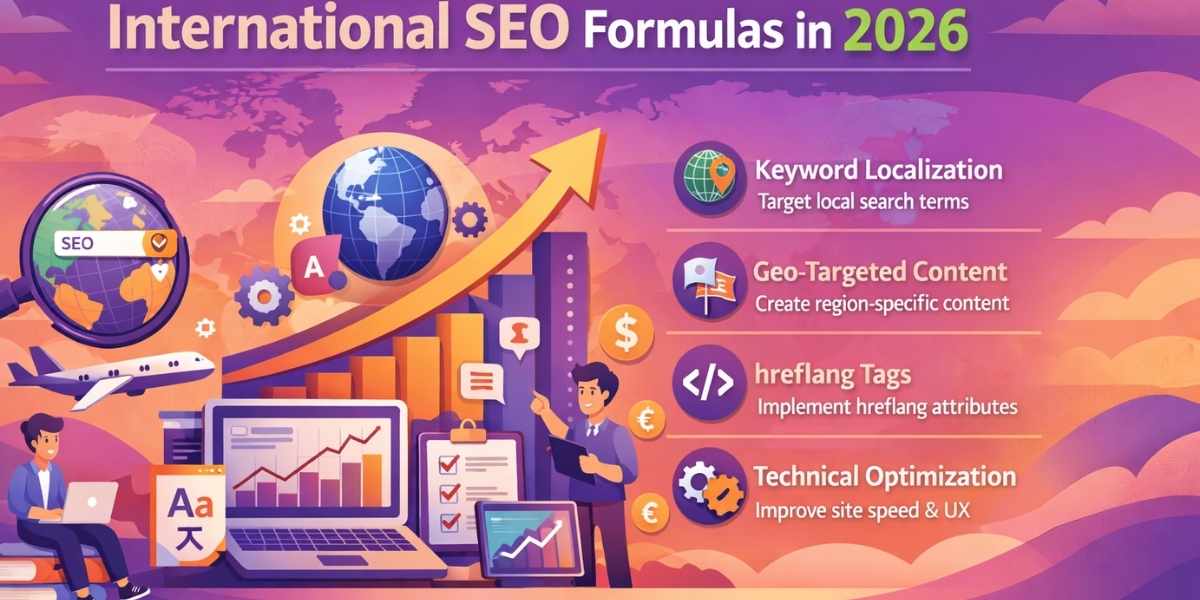
Hreflang implementation, clean country-specific URL structures, fast global performance, and tight indexation control. Get the technical layer wrong and even brilliant content won't be understood correctly or won't be trusted at all.
The core pieces, in order of how often they break:
-
Hreflang implementation - signals language and regional targeting directly to search engines. Miss this and Google guesses, badly.
-
Clean URL structures - country-specific subdirectories or ccTLDs make regional intent obvious at a glance.
-
Fast performance globally - a site that loads fine in Kathmandu but crawls in São Paulo is bleeding rankings there.
-
Indexation control - without it, duplicate content across regions confuses crawlers and dilutes authority.
Technical errors here don't stay contained to one market. A broken hreflang cluster can quietly tank rankings across three or four countries at once, which is exactly why periodic audits matter more here than in single-market SEO.
Does International SEO Still Work the Same Way With AI-Driven Search?
Short answer: Not entirely. AI-driven search systems focus less on ranking every regional page and more on choosing the one version of your content they trust most which means pages that look too similar across countries often get collapsed into one, with the rest losing visibility even when nothing is technically wrong.
This is the part that's genuinely new for 2026. Translation alone doesn't cut it anymore. What AI systems are actually looking for is clarity of meaning: who the business is, which market a given page serves, and why that particular version matters. Search engines have shifted from evaluating "a page" to evaluating "a brand as an entity" and when that entity's regional relationships are clearly mapped out, both traditional and AI-driven search can find the right content for the right audience. This lines up with the broader shift we cover in SEO trends dominating 2026 retrieval and trust now sit alongside ranking as separate battles you have to win.
What Actually Works in International Content Marketing?
Localization, not literal translation. Content that performs well internationally is written around cultural relevance and plain, clear language not run through a translator and republished as-is.
The brands that consistently hold organic visibility across markets treat content and SEO as one effort, not two separate teams working in silos. They write regional stories that feel native to each market rather than copy-pasted with a language swap. Google's helpful content guidance points at the same four pillars regardless of market experience, expertise, authoritativeness, trust but in international contexts, trust in particular gets harder to fake. A translated testimonial reads differently than a real one written for that audience, and readers notice.
Does Local SEO Still Matter Inside a Global Strategy?
Yes international SEO handles the big picture, but local signals still decide whether you show up for someone searching with a location modifier. Skipping local optimization inside an international strategy leaves real, recoverable traffic on the table.
That means:
-
Country-specific landing pages that actually read as local, not translated
-
Localized keywords built from real regional search behavior
-
Regional business and trust signals, kept accurate market by market
If you're running campaigns into a market like London, this is usually where the gap shows up first global content that's technically correct but locally invisible.
How Do Backlinks Work in an International Strategy?
Relevance beats volume. A single backlink from a respected, language-matched local site typically carries more weight for regional trust than a dozen generic global links pointing at the same page.
This is a genuine mindset shift for teams used to link-building at scale. International link building means chasing region-relevant publications and language-matched sources deliberately, not collecting links wherever they're cheapest. It's slower. It's also the version that actually holds up.
How Do You Measure Whether Any of This Is Working?
Track organic traffic by country, keyword rankings per region, conversion rates per market, and indexation health but don't stop there. Content consistency across regional teams matters just as much, because mixed messaging between markets confuses search engines the same way duplicate content does.
When different country teams update pages independently without a shared strategy, contradictions creep in fast, and search engines pick up on that inconsistency even when no single page looks broken. A clear content governance process who owns what, and how updates get reviewed keeps that from happening quietly over six months.
Run quick SEO wins checks on a regular cadence rather than waiting for a full annual audit. Small technical drift compounds across regions faster than it does on a single-market site.
References & Further Reading
-
Google Search Central - Search Quality & Helpful Content Guidelines
-
Ahrefs - International SEO and Keyword Research Studies
-
Moz - Technical SEO and Global Search Insights
Frequently Asked Questions
What is international SEO?
International SEO is the practice of structuring a website so search engines understand which country and language each page targets, ensuring users see the correct regional version instead of a generic or mismatched one.
Does direct keyword translation work for international SEO?
Rarely. The same search intent is often expressed with entirely different words across regions; keyword research needs to be done per market, not translated from a single source list.
What's the biggest technical mistake in international SEO?
Broken or missing hreflang implementation. It's the single most common cause of a site ranking against itself across multiple country versions.
How does AI-driven search change international SEO?
AI systems increasingly evaluate brands as entities rather than ranking every regional page individually. When regional content looks too similar, AI systems may collapse it into one trusted version and reduce visibility for the rest even on technically correct pages.
Do backlinks still matter for international SEO in 2026?
Yes, but relevance now outweighs volume. A single link from a respected, language-matched local publication typically does more for regional trust than many generic global links.
Final Thoughts: Scaling Global Traffic Without Losing the Plot
International SEO is genuinely more complex than domestic SEO, and anyone telling you otherwise is selling something. But it's not mysterious. In 2026, it comes down to a short list of disciplines done consistently:
-
Respecting real behavioral differences between markets instead of assuming one strategy fits all
-
Getting the technical fundamentals hreflang, URL structure, indexation right before scaling content
-
Using market-specific data instead of assumptions carried over from your home market
-
Balancing AI-assisted analysis with actual human strategic judgment
There's no shortcut that survives contact with five different search markets at once. But the businesses doing this properly right now are the ones still visible a year from now, in every region they entered, not just the one they started in.